Surprising Jobs That Can Pay $100,000

According to an article in Forbes, there are a few surprizing jobs that pay $100k salaries. Not everyone in this profession makes 6 figures, but there probably 20%+ that do.

10 surprising jobs that can pay you $100,000
Court reporter
Professional (life or career) coach
Mine manager
Salesperson
Truck driver
Pressman
Technical writer
Restaurant manager
Air traffic controller
Elementary school principal

Well, if I ever need a job in another profession, I’m pretty sure I can cut it as a Court Reporter [Just need to type 200 words/minute], a Mine Manager[Dig a hole THERE!] or a Truck Driver!

Condo Prices Fall Nationally

According to MarketWatch.com,

Prices for condos were down 0.3% year-over-year nationally. Fifteen cities had double-digit increases from a year earlier, while 14 had declines. In the condo market, Phoenix, Ariz., had the biggest gains, up 25.3%. Condo prices fell 5.1% in the Atlanta, Ga., metro region. Condo prices were down in once-hot markets like San Diego and Washington.

Nationally, median prices for existing homes were up 3.7% year-over-year, according to data already released by the group.

The biggest year-over-year gain was in Baton Rouge, La., where prices jumped 27.3% as demand skyrocketed after the hurricanes. The rest of the top 10: Ocala, Fla.; Virginia Beach, Va.; Gainesville, Fla.; Portland, Ore.; Jacksonville, Fla.; Tampa, Fla.; Spokane, Wash.; Beaumont, Texas; and Eugene, Ore.

And according to the Real Estate Journal

Price gains slow across the U.S.

In the second quarter of this year, there was a drop in the number of cities experiencing double-digit home price gains from the same period the year before — from 66 to 37, according to new data released by the National Association of Realtors and published by MarketWatch.com. In the second quarter of this year, 26 cities experienced price declines, compared to 16 metros last year, MarketWatch says. Across the U.S., median existing-home sale prices rose 3.7% between the second quarters of 2005 and 2006, the Web site says. Baton Rouge, La., showed the biggest price increase — 27.3%, while Danville, Ill., had the biggest price drop — 11.2% — the article says. Condo prices fell 0.3% nationally, with Phoenix, Ariz., experiencing the biggest increase — 25.3%, the Web site says.

Hot vacation-home markets cool

During the housing boom, prices for second homes in vacation hot spots across the U.S. soared. But now, as the real-estate market slows, price tags in some areas are declining, The New York Times says. Vacation locales in all price ranges are experiencing a slowdown — from pricy enclaves like Lake Tahoe in California and Nevada and the Hamptons in New York, to more modestly priced locations like the Jersey Shore and Panama City, Fla., the paper says. According to the article, sales dropped 35% in the first half of this year in Lake Tahoe, 14% in Southampton, N.Y., and 19% in East Hampton, N.Y. Median prices declined 10% in June from the year before in the more modestly priced Panama City, Fla., and dropped 10% to 15% this spring and summer from the same period a year before in Ocean City, N.J., the New York Times says.

Prices have started falling in San Diego. 10% in the condo range and a little more in the high end home range. Even the median home price is down 5-10% from last year. I’m glad I’m a renter!!!

First Morgan Silver Dollar Arrives


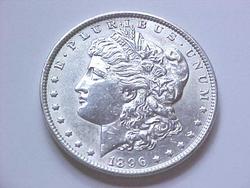
I got my first Morgan Silver Dollar today. Morgans are beautiful, large and allegedly the most popular collectible coin in the US today. This particular specimen was minted in 1896 making around a 110 years old. Its in pretty good condition for a coin of that age. Considering I only paid $21 for it, I’d say its a great deal too!

It has the liberty face on one side and an eagle on the other. Because of the eagles’ somewhat scrawny appearance, they used to be called buzzards! Its called the Morgan after the dude who designed the coin.

Gold At $100 Off Its 2006 Highs

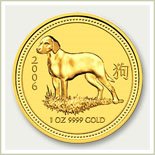
Lunar Gold DogGold has retreated quite a bit since its high of $730 on May 11th 2006. Its currently trading around $630/oz. I see this as a good buying opportunity. While I’m against dollar cost averaging, I think gold is in the beginning of a bull cycle and this justifies buying on dips.

Lunar Silver Dog

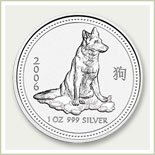
I recently bought another Australian Lunar Series coin. This time I got the Dog. Also got it in the Silver coin and surprizing the species of dog is different on both of them.

british gold sovereign
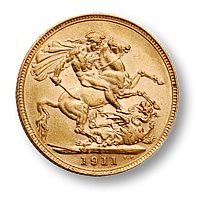
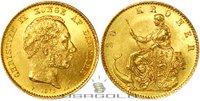
Anyway, I also bought some gold British Sovereigns [around 100+ years old], some French and Swiss francs and an 1873 Danish “Mermaid” Coin.
danish mermaid 20 kroners
I also bought a 200 yr old gold coin of Napolean Boneparte! [Ok maybe I’m going nuts with this gold coin stuff, but its hard to stop buying those damn things now!] Better stop now before the wife gets upset!

I also got a bunch of Silver Eagles. Funny how the price of silver is so low considering that its used in electronics as well as jewellery. Compared to Gold [which in my mind is inherently useless] it hasn’t gone up as much. Anyway I’ll post pictures of them later.

Famous Quotes

Sometimes your best investments are the ones you don’t make.
Donald Trump

I buy expensive suits. They just look cheap on me.
Warren Buffett

There’s nothing wrong with getting fired.
Ted Turner

The consumer isn’t a moron; she is your wife.
David Ogilvy

My son is now an “entrepreneur.” That’s what you’re called when you don’t have a job.
Ted Turner

More Oil News

And just when you thought that the price of oil couldn’t go any higher you hear that Exxon’s been understating their profits by around 10%!!!! There’s a tax loophole that allows companies to use a fixed pricing for their cost of goods. Some companies use this to artificially boost their profits, while some like the oil companies use it to hide them!!!

Anyway, according to an article in fortune, US drivers haven’t changed their driving habits and oil consumption is actually higher than it was last summer. Instead, they say we’ve cut other stuff like eating out.

Interesting Articles On Credit Expansion And Liquidity

Another interesting article about deflation, this time caused by excess global liquidity.

But, for now, a superabundance of money and credit is financing a leap in asset prices across markets and time zones. Colleague Ian McCulley has made a study of this transnational and heterogeneous bull market. The most favored asset classes run the gamut: comic books, Spanish postage stamps, U.S. farmland, Indian paintings, exotic automobiles, Middle Eastern antiquities, Middle Eastern equities, European houses, Tokyo land. Taking a bow for a stellar second quarter, Sotheby’s cited strength in the Chinese art market, the Russian art market and in Impressionist and contemporary art sales in London. It has pushed through a 22% increase in commission rates.

Also got an email today also talking about credit expansion.

“It’s time,” Addison reports from on the scene in Cannes, France. “The good doctor poked me in the shoulder last night at dinner. ‘It’s time for the United States to collapse,’ he said, with a satisfied smile on his face. ‘The world needs to heal.'”

In a normal economic expansion, Dr. Richebächer contends, credit expansion is roughly equal to the nation’s savings. As 2005 was the first full year in which the U.S. consumer saw a negative savings rate since 1933, the rate of credit expansion should have also been negative.

Au contraire, Dr. Richebächer estimates that for every dollar of GDP produced in the United States last year, over four dollars of credit was created. “We haven’t seen such a bubble as this one since the 1920s. The only difference is…this time it’s much worse,” says the good doctor.

If you want to read why Dr. Kurt Richebächer thinks the US is headed for a slump you can read the whole article By Far the Weakest Recovery

Fed Didn’t Hike The Rates Today

Today the Fed the the brakes on the rate hikes. So will the Fed stay on pause or will it continue raising the rates at the next meeting?

Seems like economists don’t know either.

“There was a strong case for pausing at 4.5%,” said Ian Shepherdson, chief U.S. economist at High Frequency Economics. “There was already plenty of evidence the previous hikes had begun to soften growth.” He predicts the Fed will start to cut rates by next April.

“You can’t fight inflation without risking overkill on the economy,” said Ethan Harris, chief U.S. economist at Lehman Brothers, who thinks the Fed shouldn’t have paused and predicts it will eventually raise the rate to 5.75%. “That is a risk, and it’s a risk they should take.”

There’s an interesting theory I read somewhere put forth by a trader[of course]. You should watch how the market reacts to the Fed’s rate hike [or not] and see what it does. Apparently if you take the opposite position, you will be rewarded the very next day with an inverse movement in the market and a profitable trade. [NOTE: this is not something I follow, nor recommend, just something random I read]. Since the market was down today, it should supposedly move up tomorrow. Lets see if it works! [if it does, I still won’t recommend it]

Tesla’s Motors Electric Roadster

With today’s surge in crude oil prices to $77/barrel, we can expect prices at the pump to jump up as well. How would you like to buy a sports cars with performance that rivals a porsche and only costs 1 cent/mile???

Well Tesla Motors is creating the world’s first electric sports car. The Telsa Roadster is a nifty piece of engineering and comes with a comparatively low price tag of $90,000. Don’t know how much it’ll cost to replace the batteries [they should last 100,000 miles] but with a 3.5 hr charge from a 240volt outlet, thats quicker than my cellphone!!!!

Myths of Hedge Funds

WSJ has a great article about Myths of Hedge Funds.

Myth #1: Hedge Funds are all the same. There are up to 25 different hedge-fund strategies which include funds invested in equity (both long and short), bankruptcies, mergers and acquisitions, high yield debt, bank debt, currencies, commodities, convertible debt, mortgage backed securities, trade claims, options, derivatives, volatility, etc. Each strategy has its own risk factors, return history, etc. Smart investors should heed the Socratic maxim of hedge funds — Know Thy Strategy.

Myth #2: Hedge Funds are too risky. This is perhaps the biggest myth of all. For the first five years of this decade, hedge funds have returned a 7% (approximate) compound annual rate of return while the S&P has returned -2.2% per year. These positive returns in a bear market demonstrate that the funds are able to produce higher returns with less-than-market risk.

Myth #3: Hedge Funds are too expensive. No doubt about it. Index funds and mutual funds can be purchased at much lower fee structures. But to savvy investors that’s not the issue. The key question is, net of fees, where do I want my capital invested? Hedge-fund fees are high as they are meant to compensate the top investment talent available. The question isn’t, are hedge funds expensive? But rather, are the fees worth it? The market is saying yes.

Myth #4. Hedge Funds are secretive. Not so. Hedge funds are sold through privately distributed prospectuses which carefully describe, among other things, the fund’s investment parameters, terms of investment, redemption rules, conflicts of interest, as well as the backgrounds and track records of key personnel. In addition, the funds provide annual GAAP audits detailing their assets. Many, although not all, funds disclose their portfolio holdings upon request. A fund that failed to provide this information would have a minimal chance of raising meaningful capital.

It is true that this information is not publicly available. This is not because managers are secretive, but rather because the funds are privately offered and SEC rules prohibit managers from making the information available.

Myth #5: Recent Hedge Fund regulations will prevent fraud. There is no reason to believe that recent SEC regulations will prevent fraud. Funds can avoid regulation by imposing a two-year lock-up on capital raised on or after February 2006. It is safe to assume fraudsters will avail themselves of that loophole. What the new regulations have done is to reduce the liquidity normally provided to investors. Funds of funds now have to choose between allocating to funds which impose two-year lock-ups (as many of the top funds are now doing) thereby reducing investor liquidity rights, or selecting funds that are not their “first choice” but will register and provide annual liquidity. That means that in the name of “protecting the public” the SEC just reduced the liquidity available to funds of funds and hedge-fund investors. While fraud will never be entirely eliminated, continually evolving due diligence and other best-practice standards should reduce the scope and frequency of fraud.

Myth #6: Funds-of-funds investors need more regulatory protection than hedge-fund investors. Of the $1 trillion in hedge funds, approximately $335 billion comes from funds of funds. Most funds of funds require individual investors to be qualified purchasers (those with $5 million or more in investable assets), so they don’t prey on widows and orphans. Less than 3% ($8 billion) of all capital invested in funds of funds is estimated to be in publicly registered “fof” vehicles where investors who are not qualified purchasers can invest. Hardly worth a new regulatory scheme. In fact, like hedge funds, funds of funds provide monthly track records, annual audited reports and detailed prospectuses which disclose conflicts of interest, investment terms, etc. Fund-of-fund annual reports are required to disclose any investment that exceeds 5% of total assets. Many funds of funds are fully transparent.

Myth #7: Hedge Funds destabilize markets. While the collapse of Long Term Capital Management in 1998 was immensely destabilizing for the markets, it is really the exception that proves the rule. Most funds run modestly leveraged, since they do not want to incur a loss large enough to jeopardize the franchise. Today hedge funds are a key source of liquidity for the markets. They make markets more efficient, and can create value, since they often actively unlock corporate value by pressuring managements to make necessary changes. Would you rather buy a stock owned by a passive mutual fund or one owned by hedge-fund managers insistent upon corporate responsibility?